

The 1% problem
How our attention quietly shapes our experience of life

This morning I did a simple body–mind–heart check-in.
My body feels good. My mind feels clear—steady, alert, ready. My heart hurts a little.
Not in a catastrophic way. Just enough to notice.
That tenderness felt like an invitation rather than a problem—an invitation to widen the aperture around it instead of collapsing in on it. To remember that my life is bigger than the thing that’s hurting right now.
The situation makes up maybe one percent of the total picture of my life.
One percent.
And yet, if I’m not careful, it can take over the entire frame.
The Brain’s Quiet Trick
This is the quiet trick our brains play on us. They’re efficient. Protective. Always scanning for what’s wrong so we can fix it, avoid it, or survive it. The problem is that the brain doesn’t naturally hold context very well. It zooms. It fixates. It narrows.
Psychologist Roy Baumeister discovered something remarkable: bad is relentlessly stronger than good. Negative events, bad emotions, and critical feedback consistently have more impact than their positive counterparts. Our brains evolved this way because it kept our ancestors alert to fatal dangers. One missed threat could end your life; one missed opportunity just meant trying again tomorrow.
When something hurts, our attention snaps to it like a magnet.
Before we know it, we’re fixated on one struggling plant in a beautiful garden.
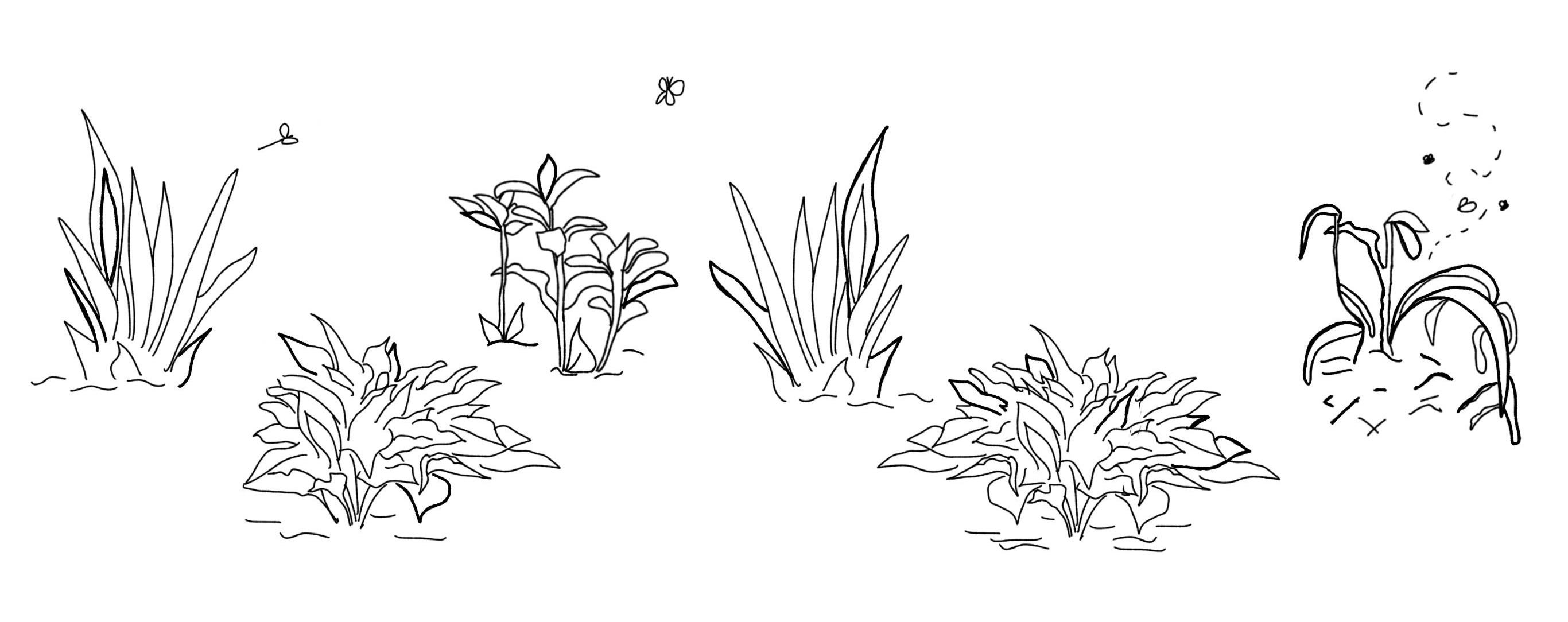
That doesn’t negate everything else that’s alive, healthy, and growing.
Still, it’s easier to see what’s wrong than to hold the totality of what’s true.
When Leaders Narrow the Frame
And when leaders zoom in on what’s broken, entire organizations follow.
Research on threat rigidity—first identified by organizational psychologist Barry Staw in the 1980s—shows what happens when pressure causes leaders to narrow their focus. Under stress, leaders restrict information processing, fall back on familiar responses, and centralize control. This cognitive narrowing prioritizes immediate threat resolution over long-term thinking. Teams start playing defense. Innovation shrinks. Everyone starts scanning for what’s wrong.
The paradox is that the narrowing happens precisely when we need wide-angle awareness most.
It takes effort to remember that things can be hard here and good there at the same time. That pain can exist in one area without defining the entire landscape of our lives—or our organizations.
Corrective Practices
This is why practices like gratitude aren’t naïve or dismissive—they’re corrective. They help restore proportion. They remind us that our lives are not reducible to the most uncomfortable part of the moment.
In organizational psychology, this is close to what’s called appreciative inquiry: the discipline of asking not only “What’s broken?” but also “What’s working?” Not as denial—but as balance.
What leaders consistently notice becomes what teams consistently deliver. If you’re only noticing problems, you’re training your organization to see problems too.
At every inflection point, there’s a choice: Fear or trust. Contraction or expansion. Fixing what’s wrong—or also honoring what’s right.
Do you believe things can get better? Or do you believe they won’t?
Because belief quietly becomes behavior. And behavior, over time, becomes reality.
The Real Work
The work, I’m realizing, isn’t to focus on eliminating what’s wrong. It’s to refuse to let one small area of pain or discomfort eclipse the vastness of what’s alive, meaningful, and working in our lives.
The leaders who change organizations aren’t the ones who pretend everything is fine—they’re the ones who can hold ninety-nine percent alongside the one percent. Who can see the whole garden, even while tending the struggling plant. Who model for their teams that it’s possible to face what’s hard without losing sight of what’s working.
To keep our eyes on the other ninety-nine percent, too.
Keep going,
Stephanie